
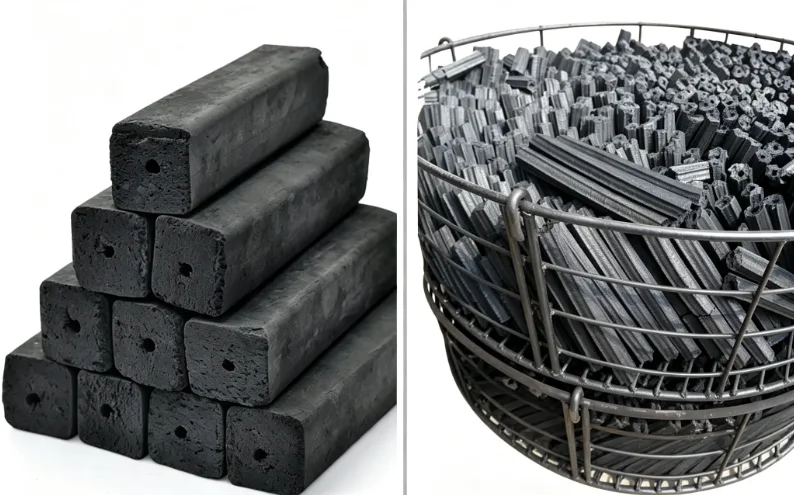
Comparison between machine-made charcoal and extruded charcoal briquettes
In the global charcoal market, sustainable and eco-friendly alternatives to traditional wood charcoal are in high demand. Two of the most popular commercial options are Machine-Made Charcoal and Extruded Charcoal Briquettes. While both are manufactured from biomass waste and serve as excellent fuel sources, they differ significantly in production processes, physical properties, and end-use applications.
What is Machine-Made Charcoal?
Machine-made charcoal, often referred to as artificial charcoal or smokeless briquette charcoal, is produced through a “first briquetting, then carbonization” process.
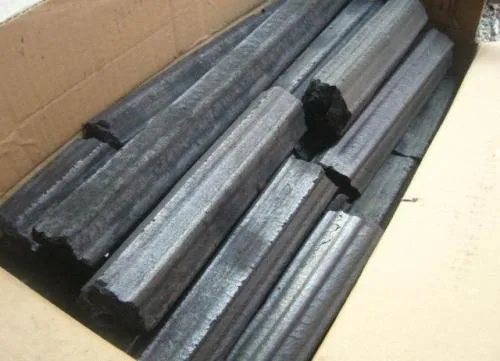
The Manufacturing Process
1. Raw Material Preparation: Biomass waste such as sawdust, bamboo dust, rice husks, or peanut shells are crushed and dried to an optimal moisture content of 8%-12%.
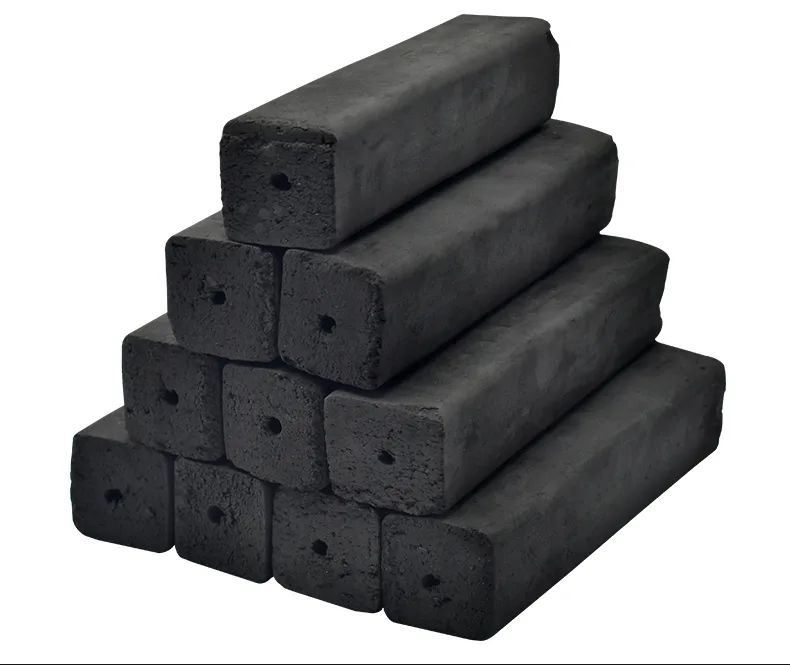
2. High-Pressure Briquetting: The raw material is fed into a briquette machine. Without any chemical binders, extreme heat and pressure cause the natural lignin in the biomass to melt and bind the particles together, forming dense, hollow rods (usually hexagonal or square).
3. Carbonization: The raw briquettes are loaded into carbonization furnaces and heated at high temperatures. This process removes tar, smoke, and moisture, resulting in a pure, high-carbon final product.
Key Characteristics
- Zero Additives: 100% natural binding via lignin.
- High Density & Hardness: Specific gravity ranges from 1.3 to 1.9 g/cm³. It produces a metallic sound when struck.
- Superior Calorific Value: Typically between 7,000 and 8,000 kcal/kg.
- Long Burn Time: Lasts 2 to 4 times longer than traditional wood charcoal.
What are Extruded Charcoal Briquettes?
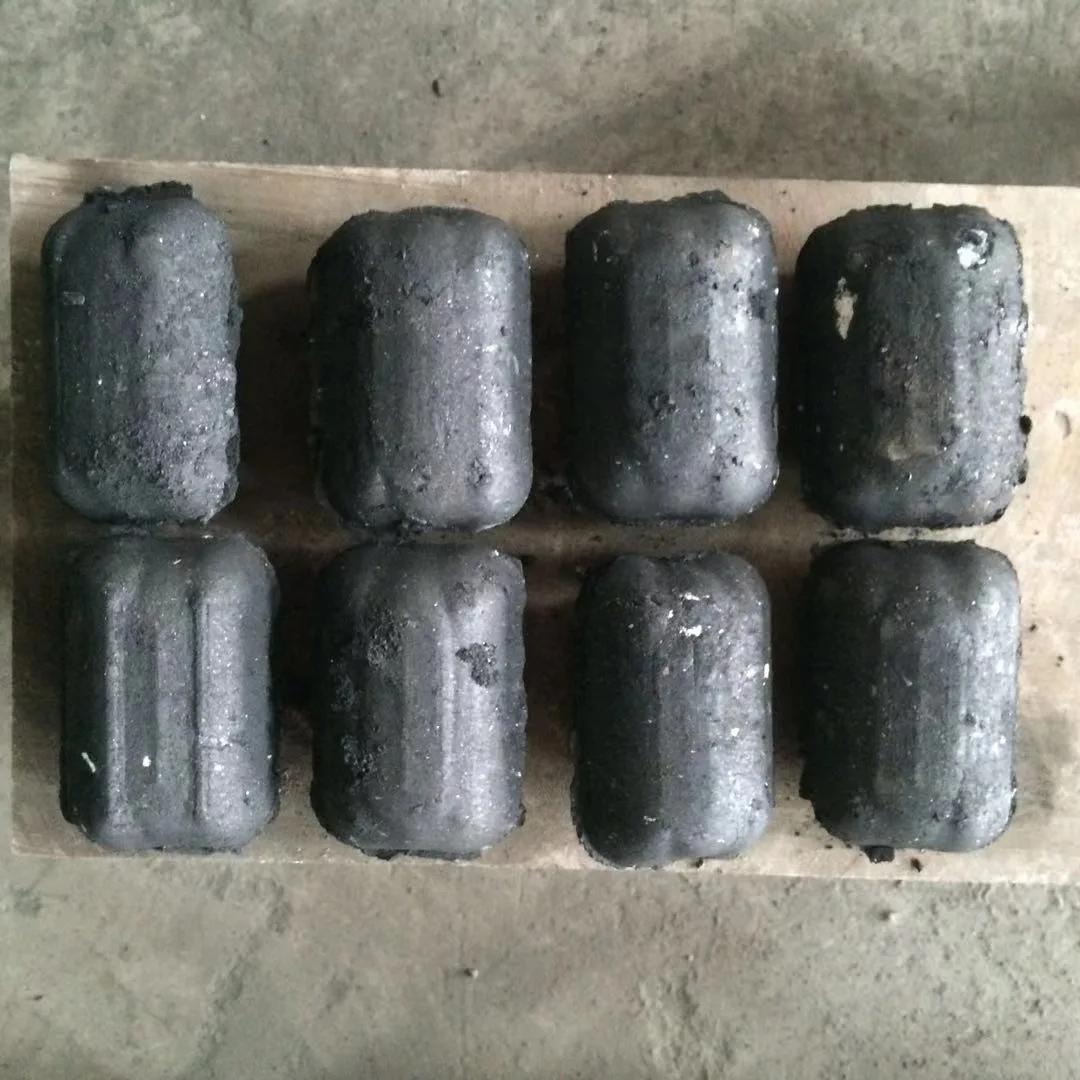
Extruded charcoal briquettes follow a “first carbonization (or using charcoal powder), then extrusion” process. This method is highly versatile and is commonly used for producing hookah charcoal, instant-light charcoal, and specialized industrial carbon products.
The Manufacturing Process
1. Preparation of charcoal powder: Crush the charcoal powder, coconut shell charcoal, or coal powder from the carbonization furnace into fine powder.
2. Drying: The wet briquettes are dried in ovens to remove moisture and harden the binder.
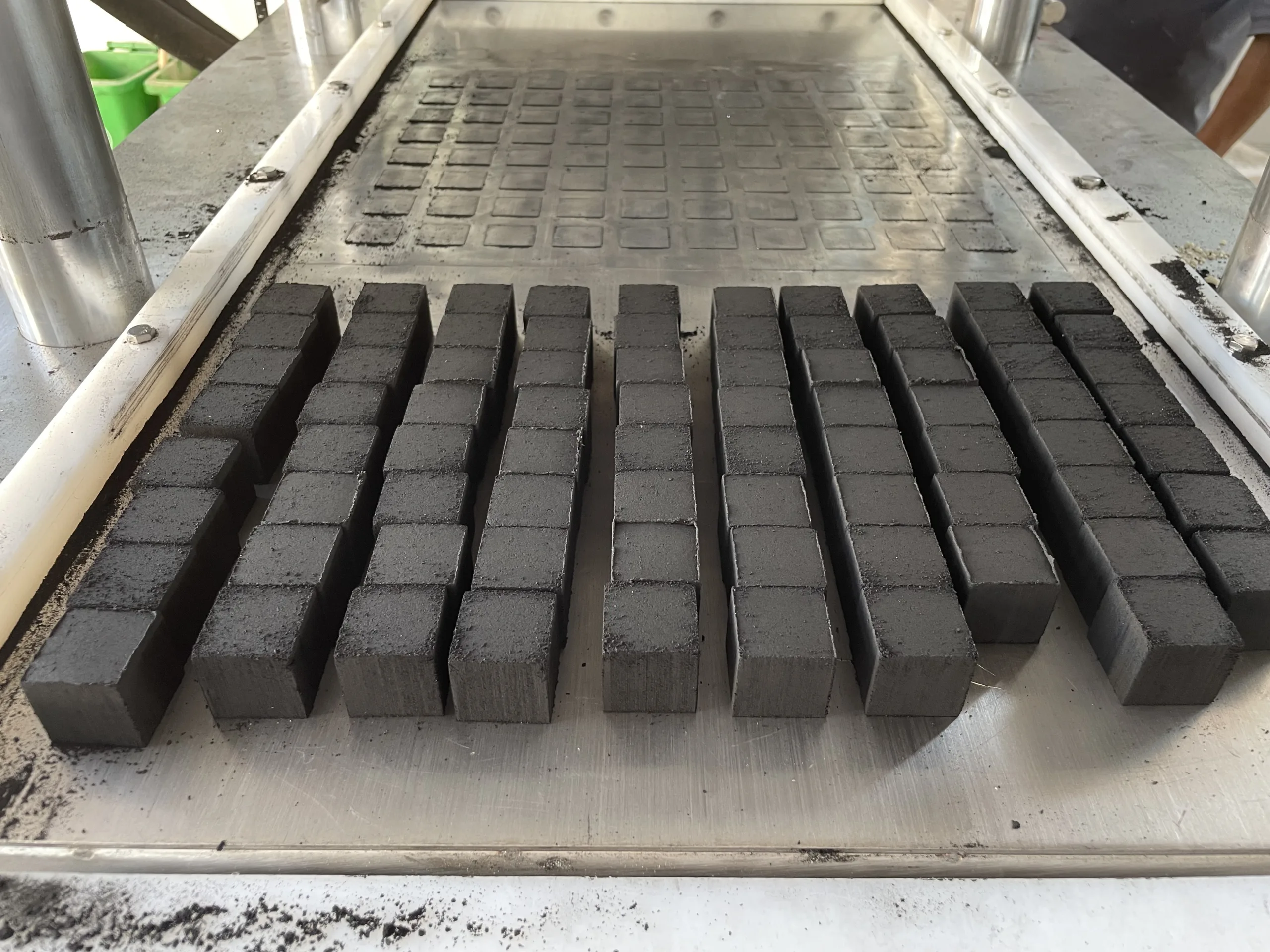
3. Extrusion Molding: The mixture is fed into an extruder machine and forced through a mold under high pressure to create specific shapes—such as cubes, cylinders, pillows, or hexagonal rods.
4. Binder Mixing: Since carbonized powder lacks lignin, it cannot be compressed alone. An eco-friendly binder (such as starch or cassava flour) is mixed with the charcoal powder and water.
Key Characteristics
- Customizable Shapes & Sizes: Molds can be easily changed to meet specific market demands.
- Binder Dependent: Requires food-grade or eco-friendly binders to maintain structural integrity.
- Easy Ignition: Burns faster and lights up quicker than machine-made charcoal.
- Moderate Calorific Value: Generally ranges from 5,500 to 7,000 kcal/kg, depending on the carbon content and binder ratio.
Core Differences
1. Production & Chemical Composition
Machine-made charcoal relies entirely on natural lignin, making it a 100% additive-free product. Extruded briquettes require binders. While reputable manufacturers use safe, food-grade starch, buyers targeting premium eco-conscious markets may prefer machine-made charcoal.
2. Density & Durability
Due to the extreme pressure and carbonization shrinkage, machine-made charcoal is significantly denser and more durable. It withstands long-distance shipping and rough handling better than extruded briquettes, which can be more fragile.
3. Heat Output & Burn Time
If your clients need sustained, high-intensity heat for commercial BBQ restaurants or industrial boilers, machine-made charcoal is the superior choice. If the end-users prioritize easy lighting and quick heat for home heating, shisha/hookah, or portable camping stoves, extruded briquettes are the better fit.
4. Market Versatility
Extruded charcoal briquettes offer unmatched customization. You can easily adjust the formula to control burn time, ash color (e.g., white ash for hookah), and smoke levels. Machine-made charcoal is mostly limited to standard hollow rod shapes for general grilling and heating.
Conclusion & Sourcing Advice
There is no absolute “better” product between machine-made charcoal and extruded charcoal briquettes; the right choice depends entirely on your target market’s needs.
Choose Machine-Made Charcoal if: You are supplying commercial BBQ chains, industrial smelting plants, or premium eco-friendly retail brands requiring high heat, long burn times, and zero additives.
Choose Extruded Charcoal Briquettes if: You are targeting the hookah/shisha market, retail home-heating sectors, or need custom-shaped briquettes with specific ignition properties.
Are you ready to produce high-quality charcoal
Contact Us Today for a free sample, detailed specifications, and a competitive wholesale quote tailored to your business!